
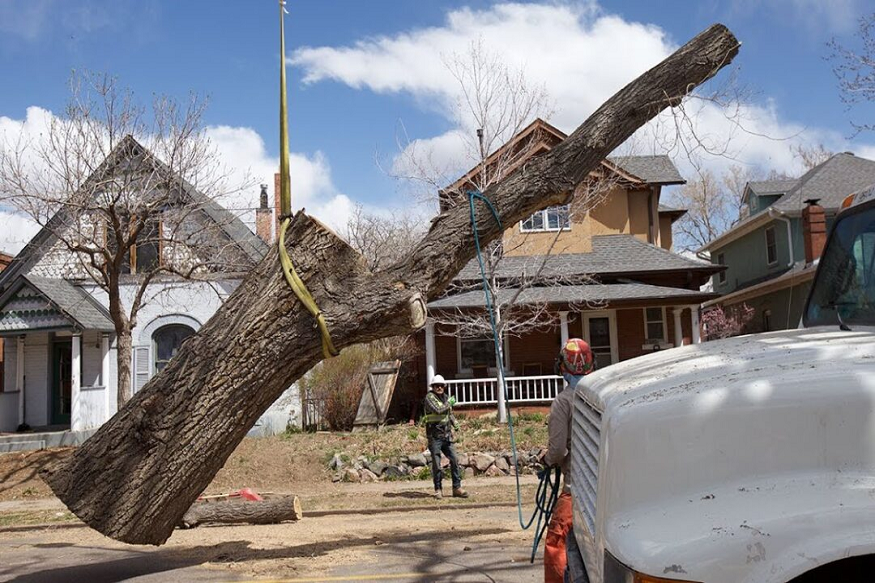
Ahealthy tree can enhance your landscape. Not to mention, add value to your home. However, there are circumstances when retaining the tree is not the best choice.
Some tree issues can be solved with pruning or regular care. But others might mean that the tree is unstable. In Denver,high winds can impose extra stress on weakened trees.Therefore, you should monitor your trees closely.
Below are some warning signs.
Dead or dying branches
Can you spot large dead branches throughout the canopy? This is one of the earliest indicators that you may need tree removal Denver.
Trees drop a few small branches every year. It is normal. But if there is a lot of deadwood, the tree is not in good health.
Even worse, dead branches can drop suddenly. This poses risks to:
Read More: Zero-Waste Shopping Centres: A Look at Ambitious Waste Management Goals
- People
- Pets
- Nearby structures.
Removal might be the most prudent alternativeif:
- Over half of the tree is dead
- It has ceased producing healthy foliage throughout the growing season.
The tree is leaning significantly
A slight lean is not always bad. Particularly when this is the natural leaning direction of the tree. However, beware of a tree that:
- Develops a tilt over time
- Suddenly leans after a storm.
There might be structural problems under the tree.
Check for:
- Exposed roots
- Splitting soil
- Peeling around the trunk base.
These can be signs of root failure. It makes the tree more susceptible to falling during severe weather.
Large cracks in the trunk
You might notice some signs in the trunk. Beware of:
- Deep vertical cracks
- Splits
- Hollow areas.
These indicate that the tree’s structure may be compromised.
Some cracks are not significant. But in many cases, extensive damage will make the tree less structurally sound.
Trees that have been severely trunk-damaged can break without warning. Especially due to:
- Heavy snow
- Ice
- Wind conditions.
Signs of disease or decay
Tree diseases do not always require removal. But advanced decay does. Some signs of internal rot include:
- Any mushrooms in the vicinity of the base
- Crumbling or soft wood
- Peeling bark
- Large holes.
In most cases, the canopy seems healthy. But the tree is structurally compromised. Especially if decay has progressed into the trunk or larger branches.
Root damage
Well-developed roots are important to:
- Maintain stability
- Provide water and nutrients to the tree.
However, root systems may be harmed by certain activities including:
- Construction projects
- Soil compaction
- Excavation
- Heavy erosion.
But the tree might not showabove-ground symptoms.
If roots are severely damaged, the tree becomes unstable. Root damage may not be discovered until the tree starts to display symptoms like:
- Dieback
- Thinning leaves
In such cases, removal is recommended.
Storm damage
Colorado’s climate is variable. Storms may cause trees to have:
- Broken branches
- Split trunks
- Damaged root systems.
Some trees recover following storm damage. But others become structurally unsafe as a result of storm damage.
Following a storm, check trees for:
- Hanging limbs
- New splits
- Noticeable differences.
Early evaluation can help prevent further damage.
Read More: RO Plant vs Commercial Water Purifier: Which One Fits Your Business Needs?
The takeaway
Removal might be the most practical solution if a tree has several symptoms of decline. At that point, it poses a safety hazard. Removal is necessary to protect your landscapeand all its users.