Hybrid working is now a permanent feature of British office life, yet many meeting rooms still feel designed for a different era. Across the UK, businesses are rethinking meeting room technology because poor audio, awkward video and slow start-ups continue to undermine productivity. Recent research shows that 73% of workers lose time to technical difficulties in hybrid meetings. Some 70% struggle to hear everyone, while 69% report echo or distortion. On average, employees spend around six minutes simply getting each meeting started. For organisations that rely on collaboration to justify office time, those minutes add up quickly.
Why meeting room technology is moving up the agenda
Expectations have changed. Employees are used to the seamless experience of consumer devices, so clunky conferencing systems are now seen as workplace friction rather than a minor irritation. Around 83% of employees say good technology matters to their workplace satisfaction in 2026.
Read More: Common Misting System Problems and How Professional Repairs Can Help
Hybrid working is also here to stay, with 52% of office workers naming it as their ideal pattern. Yet only 25% say their employer installed or upgraded meeting room audio or video equipment in 2026, down from 35% the year before. That gap between need and investment explains why so many teams still battle the same problems.
What UK offices are changing in hybrid meeting spaces
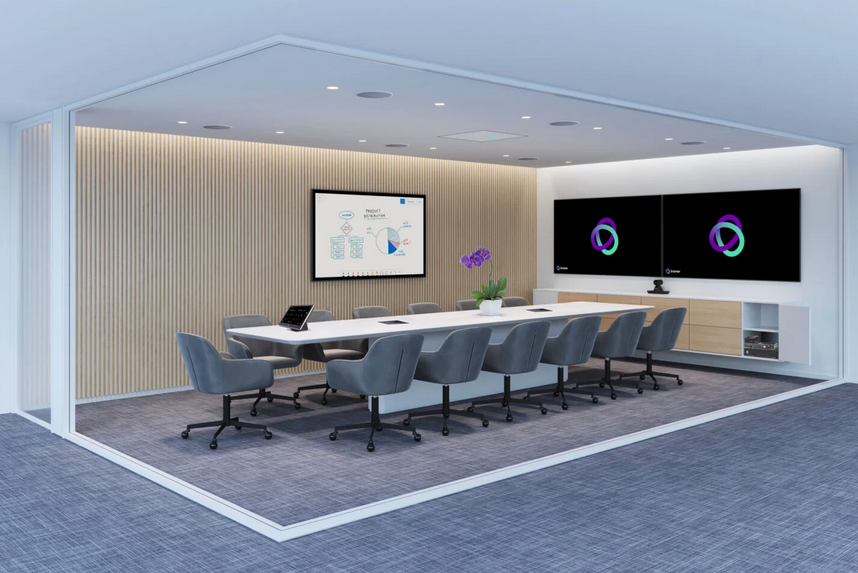
The most visible shift is a move away from piecemeal setups towards integrated systems. Video bars and all-in-one solutions simplify installation and reduce user error. Better microphones and speakers are a priority, since sound quality remains the biggest complaint in hybrid meetings. Smart cameras and AI-assisted controls help frame speakers automatically, so remote colleagues feel present rather than distant. Simpler room entry, including docking stations and one-touch joining, cuts those frustrating start-up delays. The main priorities for hybrid-ready rooms now include:
Building hybrid-ready rooms that last
Hardware alone does not solve the problem. Employers increasingly want managed ecosystems that staff can use without calling IT for help. Providers such as Biamp reflect this approach, combining conferencing, room control, business audio and centralised management across the whole AV estate. Compatibility with platforms such as Microsoft Teams, Zoom Rooms and Google Meet helps organisations standardise rooms across different sites. Remote monitoring also lets IT teams spot faults before they disrupt a meeting.
Read More: Electrical Faults and Fire Risk: What UK Tenants Need to Know About Wiring Claims
Training matters too, as only 8.5% of workers have been shown how to run or join hybrid meetings effectively. Pairing intuitive meeting room technology with clear guidance gives UK businesses the best chance of turning every meeting space into a genuine hybrid collaboration space.