
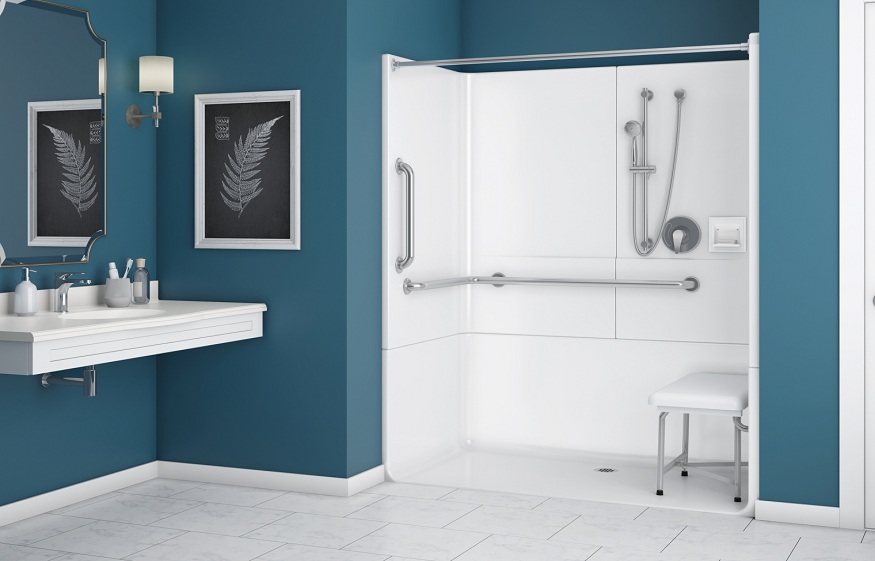
Designing an accessible bathroom is a delicate balancing act between rigorous engineering and human-centered design. At the heart of this challenge lies the shower floor, a surface that must perform two contradictory tasks simultaneously: it must be steep enough to ensure rapid water drainage to prevent flooding, yet flat enough to allow a wheelchair user to transition into the stall safely and remain stable once inside. For contractors, architects, and homeowners, understanding the Americans with Disabilities Act standards for shower slopes is not just about avoiding legal pitfalls; it is about ensuring that the most private area of the home is both functional and dignified for everyone.
The Engineering Behind the Slope
The fundamental goal of a shower slope is to harness gravity to move water toward the drain. In a standard shower, this is usually achieved with a significant pitch, but in an accessible environment, excessive sloping becomes a hazard. According to ADA guidelines, the floor of a roll-in shower must be designed so that it does not exceed a ratio of 1:48. This means that for every forty-eight inches of horizontal distance, the floor can only drop by one inch. This precise measurement ensures that a wheelchair can remain level enough to prevent tipping or sliding while the user is bathing.
Achieving this exact ratio requires meticulous preparation of the subfloor. Unlike traditional showers that often have a “curb” or step to contain water, ada compliant showers often utilize a curbless design. This requires the installer to “recess” the floor, meaning the subfloor must be lowered so that the finished tile can slope down toward the drain while meeting the rest of the bathroom floor at a perfectly flush transition. If the slope is too shallow, water will pool and potentially create a slipping hazard; if it is too steep, it becomes difficult for a person with limited mobility to maintain their balance.
Read More: RO Plant vs Commercial Water Purifier: Which One Fits Your Business Needs?
Threshold Transitions and Surface Safety
One of the most critical points of an ADA shower is the threshold—the point where the bathroom floor meets the shower stall. To be truly accessible, this transition must be as seamless as possible. The ADA allows for a maximum vertical change in level of one-quarter inch. If the change is between one-quarter and one-half inch, the edge must be beveled with a slope no steeper than 1:2. Anything higher than a half-inch is generally considered a barrier that could catch the wheels of a chair or cause a person using a walker to trip.
Beyond the height of the transition, the nature of the surface itself is a safety standard. While the slope handles the water, the material handles the grip. ADA standards require that floor surfaces within the shower be slip-resistant. This is particularly important on a sloped surface where water and soap are present. Small-format tiles are often preferred in these designs because the high frequency of grout lines increases the coefficient of friction, providing better traction for both rubber wheels and bare feet.
Read More: What Most Homeowners Don’t Realize About Starting a Custom Home
Drain Placement and Its Impact on the Pitch
The location of the drain determines how the slope is constructed. In many traditional ADA designs, a center drain is used, which requires the floor to slope inward from all four corners. This is known as a four-way pitch. While functional, a four-way pitch can sometimes create “warping” in large-format tiles, making it difficult to maintain a perfectly flat surface for a wheelchair.
In modern accessible design, linear drains have become the gold standard. A linear drain is a long, narrow grate usually placed along the back wall or at the entrance of the shower. This allows for a “one-way pitch,” where the entire floor slopes in a single direction toward the drain. A one-way pitch is significantly easier to navigate in a wheelchair because it eliminates the complex compound angles of a center drain, providing a more stable and predictable surface for the user.
Conclusion
The requirements for ADA shower slopes represent a sophisticated marriage of hydraulic engineering and accessibility. By adhering to the 1:48 slope ratio, ensuring seamless threshold transitions, and selecting the right drainage system, builders can create an environment that is both safe and aesthetically pleasing. These standards serve a vital purpose: they remove the barriers that turn a simple daily task into a struggle. When a shower is built to these specifications, it provides more than just a place to wash; it provides independence and peace of mind for individuals of all ability levels. Whether you are remodeling for a loved one or designing a commercial facility, getting the slope right is the foundation of a truly inclusive space.