
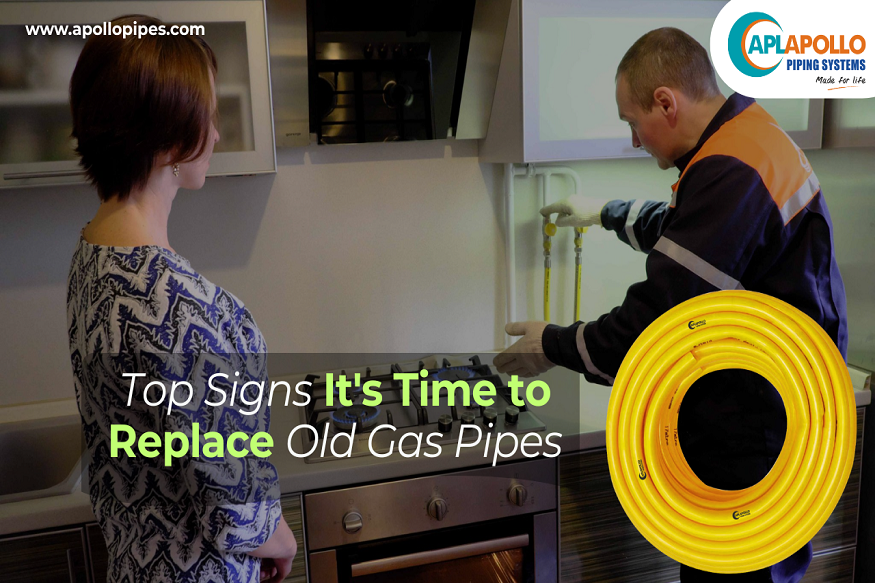
We do not care about gas pipes until something goes wrong. These pipes sit quietly behind walls, under the ground or along buildings, doing their job day after day. But like everything else, gas pipes do not last forever. Over time, wear and tear, corrosion and outdated materials can turn them into serious safety risks.Knowing when it is time to replace old gas pipes can save you from leaks, costly repairs or even dangerous accidents. Following are the most common signs you should not ignore.
-
A Strong Smell of Gas
It is the biggest and most obvious warning sign. If you notice a persistent smell of gas in your home, it is a clear indication that your gas pipes may be leaking. Even small leaks can be hazardous and should never be ignored. If this happens, turn off the gas supply immediately and contact customer care numbers.
-
Frequent Gas Leaks or Repairs
If you have to call technicians again and again to fix leaks, it is also a strong sign that your gas pipes have reached the end of their life. Temporary repairs may work for a while, but repeated issues usually mean the pipes are deteriorating internally.
-
Rust or Corrosion
Older metal gas pipes are prone to rust and corrosion. If you see discoloration, cracks or dents on exposed sections, it is a sign that you should replace these pipes. Corroded gas pipes weaken over time and are more likely to leak under pressure. Modern polyethylene gas pipes do not have this issue, which is why many systems are now being upgraded.
Read More: The Complete Guide to Choosing the Perfect 90cm Cooker Hood for Your Kitchen
-
Aging Infrastructure
Age matters when it comes to gas pipes. If your building is several decades old and the gas lines have never been replaced, it means they are going to become outdated. Older materials may not meet current safety standards and are more vulnerable to damage. In this situation, replacing old gas pipes can be a smart preventive move.
-
Drop in Gas Pressure
Slow heating, weak flames or inconsistent performance can lead to problems within the gas pipes. Internal blockages, leaks or structural damage can reduce gas flow, affecting how efficiently your appliances work. This is often an indirect but important sign that replacement is necessary.
-
Hissing or Whistling Sounds
Unusual sounds near gas lines like hissing, whistling or faint blowing noises can indicate gas escaping through small cracks or joints. These sounds are often associated with aging or damaged gas pipes and should be taken seriously. Ignoring them can lead to bigger safety concerns.
-
Ground or Wall Damage Near Gas Lines
If you notice dead patches of grass, soil sinking or cracks in walls near underground or concealed gas pipes, it could be due to a hidden leak. Gas escaping underground can affect soil composition and cause surface-level damage. This is a strong sign that your gas pipes need possibly replacement.
-
Outdated Pipe Material
Many older buildings still use cast iron or steel gas pipes, which were common decades ago but are no longer considered the safest option. These materials are rigid, corrosion-prone and less resistant to external stress. Modern MDPE and HDPE gas pipes are flexible, leak-proof and more durable which makes them a safer replacement choice.
Read More: PICHWAI: THE FOLK ART OF NATHDWARA
APL Apollo’s Gas Pipes Top of Form
Bottom of Form
APL Apollo’s polyethylene gas pipes are one of the safest and most cost-effective choices for piped gas distribution today.These MDPE and HDPE pipes offer consistent, leak-proof, and corrosion-resistant performance, ensuring safe and long-lasting gas transportation in residential, commercial and industrial applications.That is why almost all major City Gas Distribution (CGD) and Coal Bed Methane (CBM) companies across India trust APL Apollo for their gas infrastructure needs. MDPE and HDPE piping systems have completely changed the way gas is transported. APL Apollo gas pipes are known for their strength, flexibility and long service life and are widely used for both residential and industrial applications. These pipes offer a safe and efficient solution for carrying natural gas, PNG, LPG, propane and even biogas.
Lightweight yet extremely durable, APL Apollo’s MDPE and HDPE gas pipes can last for over 100 years without rusting or degrading. In fact, gas distribution was one of the earliest large-scale uses of polyethylene pipes and many systems installed more than 60 years ago are still working smoothly today.